
What is NIL?
The concept of NIL – Name, Image, and Likeness – is transforming the landscape for student-athletes across the U.S. and worldwide. Under NIL, student-athletes are empowered to profit from their personal brand while still in school. This means athletes can now earn money from sponsorships, endorsements, social media, personal appearances, and more. Since July 1, 2025, NIL also works alongside a new system: under the House v. NCAA settlement, Division I schools can pay athletes directly through revenue sharing, and third-party NIL deals are reviewed by the College Sports Commission. Following these rules is what keeps an athlete eligible. NIL is an unprecedented opportunity to build your brand and establish financial security while excelling in your sport and academics.
At NIL Plus Group, we’re here to help you understand the complexities of NIL, leverage your unique talents, and maximize your potential in this exciting new era.



What is the
“Cost of Attendance (COA)”?
The Cost of Attendance (COA) represents the estimated total cost for a student to attend a university for one academic year, encompassing more than just tuition and fees. For student-athletes, many universities include COA in their athletic scholarship packages, helping cover both educational and day-to-day living expenses associated with college life.
What Does the Cost of Attendance Cover?
The COA extends beyond tuition, providing funding for essential expenses such as:
- Room and Board: Covers the cost of on-campus housing and meal plans or an allowance for off-campus living.
- Books and Supplies: Allocates funds for textbooks, lab fees, and other academic materials.
- Transportation: Includes estimated travel costs for commuting, visiting home, or participating in official university activities.
- Personal Expenses: Offers a stipend for everyday necessities such as toiletries, laundry, and other basic living costs.
For student-athletes, these funds provide financial stability, allowing them to focus on academics and athletics without undue stress.

What is
NIL Collectives?
An NIL collective is an organization, usually funded by alumni, boosters and local businesses, that pays student-athletes for NIL activities such as appearances, social media content and charity events. Before 2025, collectives were the main source of NIL money in college sports.
What Changed After the House Settlement?
Since July 2025, collectives connected to a school are treated as “associated entities.” Their deals with athletes are reviewed through NIL Go, the College Sports Commission’s clearinghouse, using three tests:
- Payor association: whether the payor is connected to the athlete’s school.
- Valid business purpose: whether the payor is actually using the athlete’s NIL to promote a product or service to the public.
- Range of compensation: whether the pay is in line with what athletes with comparable NIL value receive.
Payments that are really recruiting inducements or “pay-for-play” are not cleared. Many collectives have since changed their business model, merged, or moved their work into school-run NIL programs.
Why It Matters for Athletes
Collective and brand deals are still possible, but they have to be structured correctly and reported. A deal that isn’t cleared can be delayed or cancelled, so the details matter before you sign.
What is
Revenue Sharing?
Revenue sharing means a university pays its athletes directly from athletic department revenue. It became possible through the House v. NCAA settlement, which a federal court approved in June 2025. Payments began on July 1, 2025.
How Does Revenue Sharing Work?
- Opt-in schools only: only Division I schools that opted into the settlement can pay athletes this way.
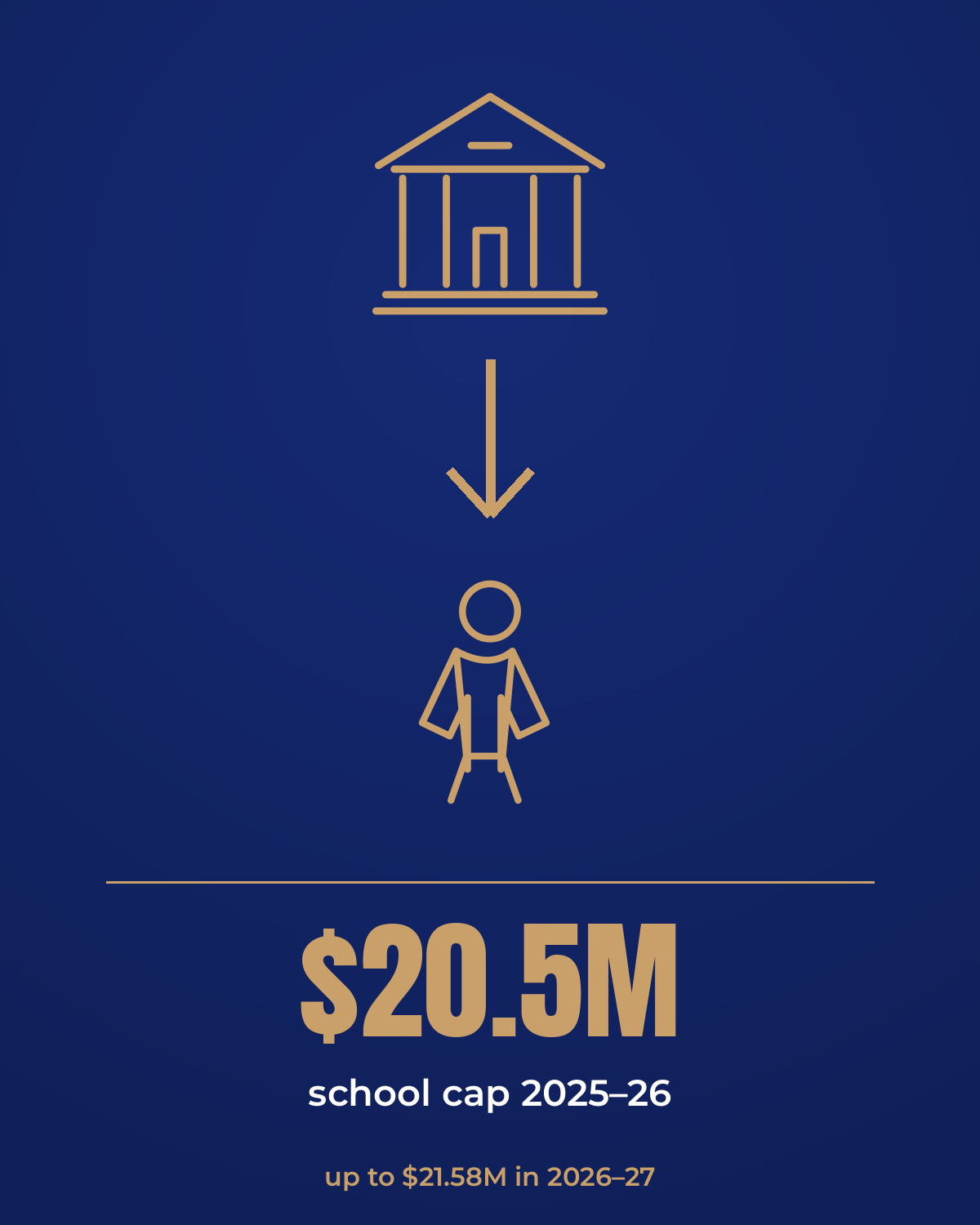
- Annual cap: each school can share up to about $20.5 million in 2025–26, rising to roughly $21.3 million in 2026–27, and the cap keeps growing over the 10-year settlement.
- The school decides the split: each school decides how to divide the money between sports and athletes, usually through a written revenue-share or NIL licensing agreement.
- Roster limits: sport-by-sport roster limits replaced the old scholarship limits.
- Separate from outside NIL deals: payments from the school are not cleared through NIL Go, but third-party deals from brands and collectives still are.
What About International Athletes?
Students on F-1 visas generally can’t work in the U.S. Many schools structure revenue-share payments as royalties for licensing an athlete’s NIL, which is treated as passive income. Bonuses tied to on-field performance can look more like payment for services, so every agreement should be reviewed with immigration and tax advisors before signing. Payments to non-U.S. athletes can also be subject to U.S. tax withholding.
Did You Know?
NIL Go in Numbers
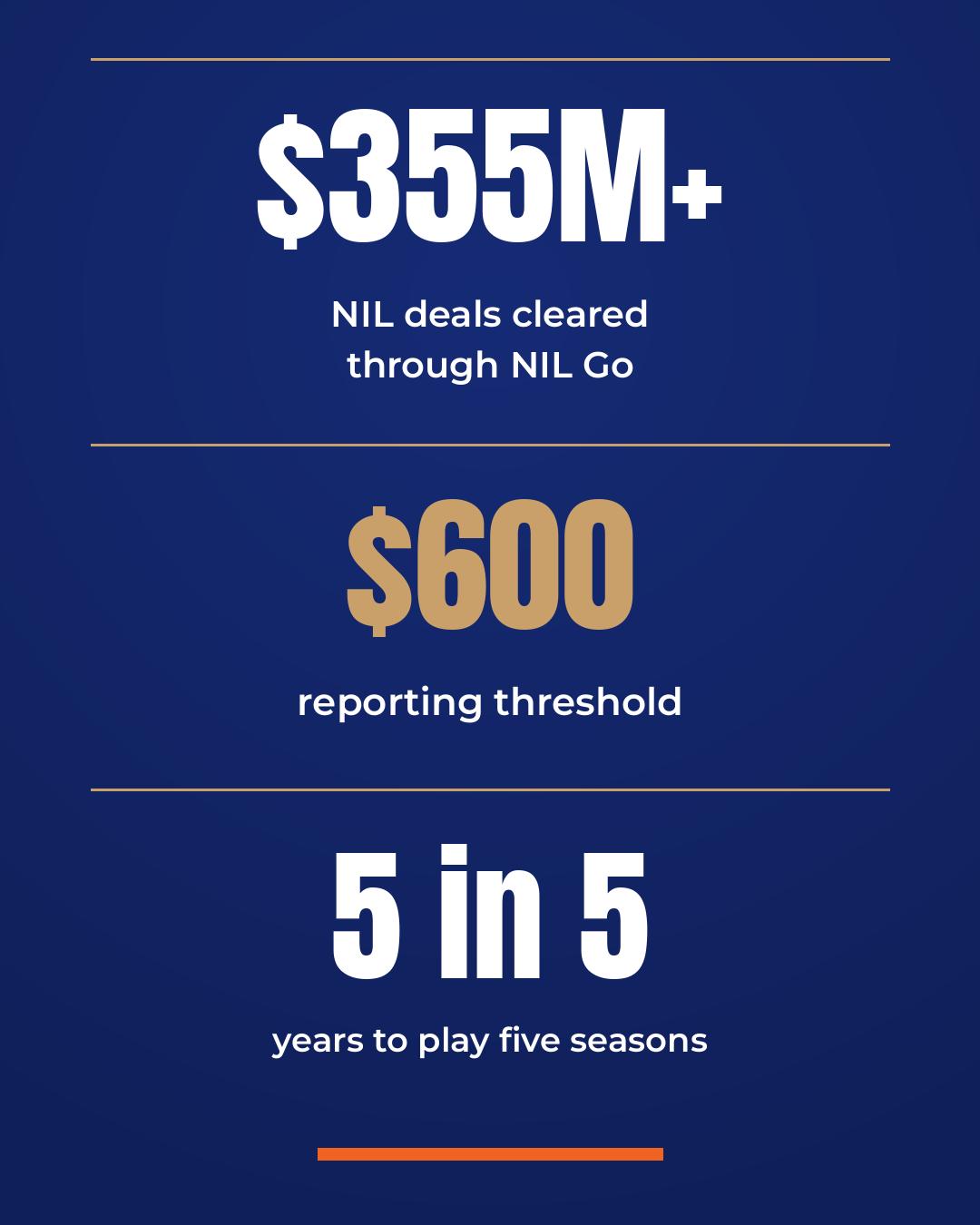
- NIL Go launched in June 2025. By July 2026, more than $355 million in third-party NIL deals had been cleared (On3).
- Division I athletes must report third-party NIL deals worth $600 or more through NIL Go.
New Eligibility Rules
- In June 2026, NCAA Division I adopted an age-based eligibility model: athletes who enroll by the academic year after their 19th birthday get five years to play five seasons. It applies to athletes who first enroll full time in fall 2027 or later (NCAA).
Washington Steps In
- On April 3, 2026, the President signed an executive order on college sports. It targets above-market NIL payments used as pay-for-play, and calls on the NCAA to set a five-year eligibility limit and to bar professional athletes from returning to college sports (Morgan Lewis).
- What this means for international players today: an executive order does not change NCAA rules by itself, and the NCAA has not adopted a rule barring former professional athletes. International players coming from professional club contracts are still being certified eligible through the NCAA’s case-by-case eligibility review.
- The Protect College Sports Act, a proposed federal NIL law, passed the U.S. Senate on September 28, 2026 and is waiting for a House vote (NIL Revolution).
Last updated October 2026. College sports rules are changing quickly. This page is general information, not legal or immigration advice.
NIL Plus Group – Comprehensive NIL Representation & Support
NIL Deal Negotiation & Representation
- Act as your exclusive NIL representative with NCAA collectives, brands, boosters, and clubs.
- Ensure all NIL contracts comply with NCAA, IRS, and visa regulations (critical for F-1 student-athletes).
- Negotiate guaranteed income, milestone bonuses, and in-kind benefits (housing, flights, apparel, etc.).
- Negotiate optional injury and buyout protection clauses for athletes leaving professional clubs to enter NCAA programs.
- Walk athletes and families through the business terms of every offer, including exclusivity, termination and payment structure, before they sign. Legal questions are referred to independent counsel.
Independent Legal Counsel
Every NIL Plus Group athlete has access to independent legal counsel through J. Cureton & Associates, Inc., led by Jerald R. “Jerry” Cureton, Esq., a Florida attorney with more than 40 years in commercial litigation, contract negotiation and arbitration.
- Agreement review before signing: the athlete’s representation agreement, university NIL licensing and revenue-share offers, and collective and third-party NIL contracts.
Athletes are always free to seek advice from any attorney of their choosing. Meet your legal counsel →
Accounting & Tax Strategy
- Refer athletes to licensed U.S. accounting firms specializing in NIL income and foreign national taxation.
Academic & Visa Compliance
- Ensure athletes remain eligible under F-1 visa restrictions and NCAA rules.
- Work with NCAA D1 Universities to structure NIL deals without endangering immigration status.
- Strategically arrange passive NIL income (licensing/royalties) or non-U.S. based NIL activity when needed.
- Guidance on NCAA and College Sports Commission rules, NIL Go reporting, and athlete-agent registration requirements.
- Help international athletes plan around F-1 visa limits on NIL activity and U.S. tax withholding, coordinating with immigration attorneys and tax specialists where needed.
Global Athlete Representation
- Manage transitions for athletes moving from pro clubs overseas into NCAA programs.
- Coordinate club releases and NCAA eligibility so the move to a U.S. university stays on schedule.
Serve as a liaison between U.S. schools and international families to ensure smooth onboarding.
NIL Plus Group – More Than Just NIL Deals
We are committed to helping athletes unlock their full NIL potential while protecting their long-term interests. Beyond financial agreements, we provide holistic guidance across brand building, legal compliance, education, and community impact.
Our Added Value
- Brand Development: Build a strong personal and professional image that stands out.
- Legal Safeguards: Independent review of agreements before signing, for compliance and athlete protection.
- Educational Workshops: Training in financial literacy, public relations, and NIL strategy.
- Community Engagement: Connect with businesses and organizations to strengthen visibility and impact.
Your Path to Success
At NIL Plus Group, we help every athlete make the most of their financial, academic, and personal opportunities in the new NIL era. From negotiating secure contracts to preparing you for life beyond college athletics, our mission is simple: protect your interests, grow your brand, and set you up for lasting impact.